The Quick Diagnosis: For fleets with standard lead-acid batteries (Trojan, Crown, US Battery), the Delta-Q is the proven, bulletproof choice. For newer machines with lithium-ion (LiFePO4) batteries or those requiring CAN-Bus communication (common on late-model Sinoboom, LGMG), the Signet is the correct replacement to avoid communication fault codes.
Symptoms & Identification
Before you condemn the charger, confirm you're seeing the right signs. A bad charger often looks like a bad battery, and that's an expensive mistake.
- Charger is dead: No lights, no fan noise when AC power is plugged in. (Confirm the outlet has power first.)
- Charger won't finish: The charge cycle runs for hours but the battery meter never reaches 100%.
- Flashing fault lights: A common Red-Green-Red blink indicates a timeout, meaning the batteries couldn't accept a charge within the pre-set time limit. A solid red usually means an internal charger failure.
- Machine throws a charger fault code: Newer lifts will tell you if they can't communicate with the charger. Trust the machine's ECU.
Tools Required
- Multimeter
- Socket and Wrench Set (Metric, typically 13mm or 15mm)
- Wire Strippers & Crimpers
- Torque Wrench
Safety Warning
Disconnect the main negative battery terminal from the pack before unbolting the old charger. A 24V battery pack can deliver over 1,000 amps, enough to weld a wrench to the frame and cause an explosion.
The Technical Guide (Step-by-Step Comparison)
When you're out in the field and a charger dies, your machine is officially a very expensive paperweight. Choosing the right replacement isn't as simple as matching the voltage. It’s about matching the tech in your fleet and avoiding downtime.
This guide cuts to the chase. Here's the technical breakdown of what actually matters.
1. Analyze Your Fleet's Batteries
This is the most important step.
- For Lead-Acid (Flooded or AGM): The Delta-Q is your workhorse. It has a massive library of charging algorithms specifically tuned for brands like Trojan, U.S. Battery, and Crown. Selecting the correct profile (e.g., Algorithm #3 for Trojan T-105s) is critical for maximizing battery life.
- For Lithium-Ion (LiFePO4): You need the Signet. Lithium batteries require a smart charger that communicates with the battery's internal Battery Management System (BMS), often over CAN-Bus. A standard charger can damage a lithium battery pack.
2. Check for CAN-Bus Communication
Look at the wiring on the old charger. Do you see the main positive and negative DC cables, plus a smaller, separate multi-pin connector? That's the CAN-Bus harness.
- If your machine requires CAN-Bus: You must use a CAN-enabled charger like the Signet. Installing a non-CAN charger (like a standard Delta-Q) will power the machine, but it will throw constant communication fault codes, the battery gauge will be inaccurate, and safety interlocks (like drive cutout when plugged in) may fail.
- If your machine is older and has no CAN-Bus: The simpler, more robust Delta-Q is the more practical and cost-effective choice.
3. Compare Physical Specs
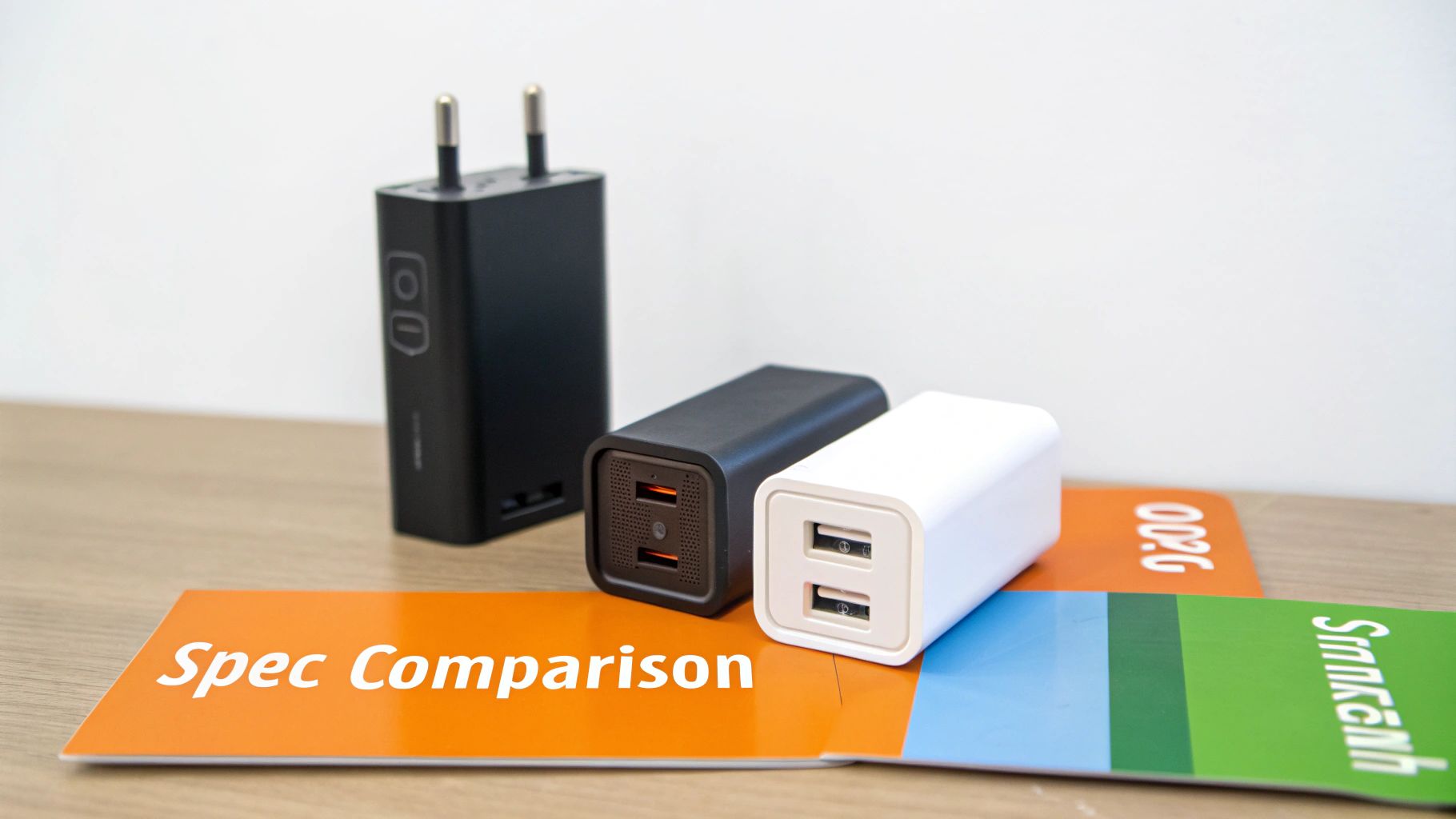
Both chargers are built for tough job sites, but here are the specs that matter.
| Specification | Delta-Q (e.g., IC650) | Signet | | :--- | :--- | :--- | | Input Voltage | 85-265V AC (Auto-Switching) | 85-265V AC (Auto-Switching) | | Max Output Amps (24V) | ~25A | ~25A-30A | | IP Rating | IP67 (Fully Potted) | IP67 (Fully Potted) | | Primary Algorithm Focus | Lead-Acid (Flooded, AGM) | Lithium-Ion (LiFePO4) & CAN | | Diagnostic Method | Onboard LED Blink Codes | CAN-Bus Data Stream, Laptop Software |
Both have auto-switching AC input, so they can handle dodgy 120V or 240V generator power. Both are fully potted with an IP67 rating, making them dust-tight and waterproof. The real difference is the brain inside.
4. Installation and Diagnostics
Swapping either unit is straightforward. Bolt it in, connect the AC and DC power.
- Delta-Q Installation: Simple. After connecting power, you select the battery profile using the button on the unit. Diagnostics are done by counting the flashes from the LED light—no laptop needed. It's fast and effective.
- Signet Installation: Physically the same, but you have the extra step of connecting the CAN-Bus harness. For diagnostics, you need a laptop with the correct software to access the deep data logs, which is powerful but slower for a quick field check.
When connecting the DC output lugs, use a torque wrench. Refer to your specific service manual for torque values—do not overtighten. A loose connection will overheat and kill the new charger.
The Part You Need
The villain is Downtime. Waiting 6-8 weeks for a charger from the dealer is unacceptable when you have a machine sitting dead. We stock universal, OEM-compatible chargers that fit LGMG, Sinoboom, and Dingli lifts because we know you need the part now, not two months from now.
- For Lead-Acid Fleets: We stock the workhorse Delta-Q SC-2411.
- For Lithium/CAN-Bus Fleets: We have the smart Signet HB600-24B.
Can't wait 6 weeks for this part? We have it on the shelf in Kansas. Check the price and availability here: https://www.chinaliftsupply.com/chargers.