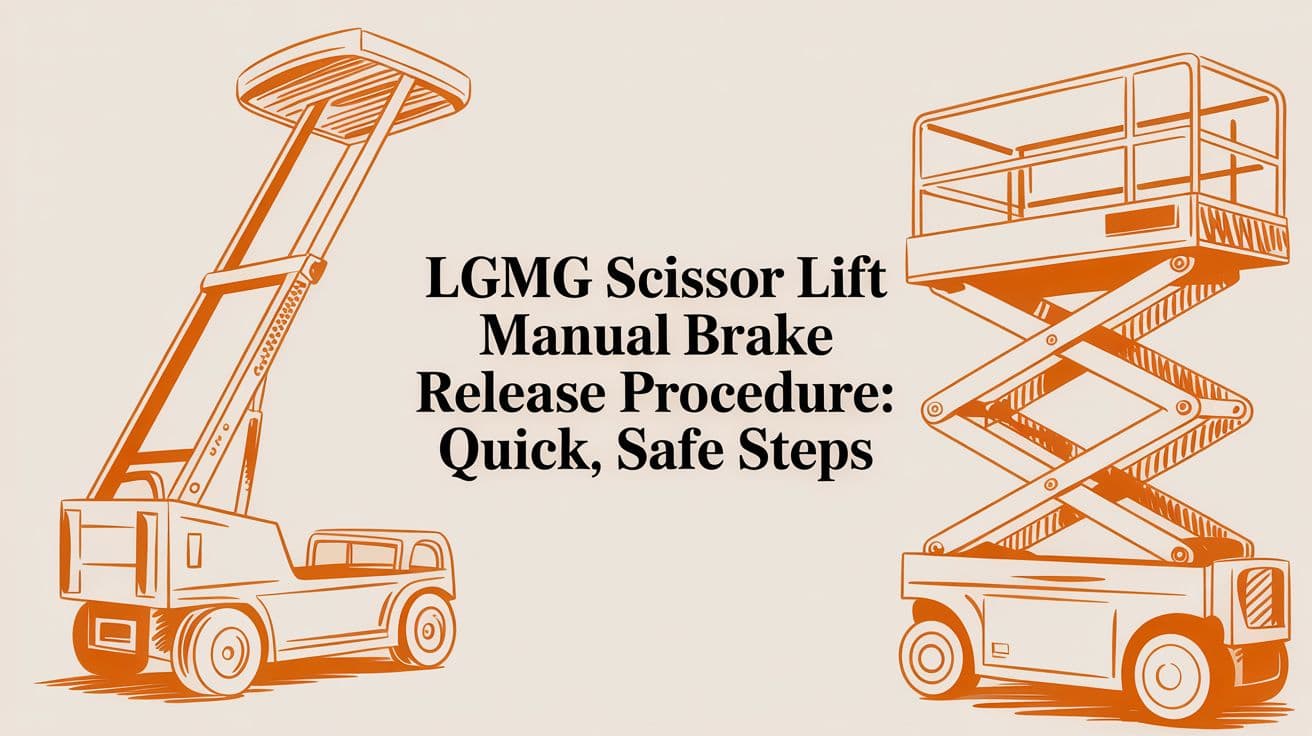
The Quick Diagnosis If your LGMG scissor lift powers up but the wheels are locked, the brake solenoid (hydraulic drive) or brake coil (electric drive) has likely failed. You must manually release the brakes to move the machine. For hydraulic models like the S1932, turn the red T-handle on the brake manifold. For electric models like the SR-E series, flip the mechanical levers on both drive motors.
Symptoms & Identification
Your LGMG lift is stuck, and you suspect the brakes. Here’s what confirms you're in the right place:
- Machine won't drive: The platform lift/lower functions work, but the wheels are locked solid.
- No "clunk" sound: When you try to drive, you don't hear the distinct 'clunk' of the brake calipers releasing.
- Machine jerks: The lift lurches slightly as the drive motors try to turn against the locked brakes.
- Fault code: Newer models may display a "drive function timeout" or a specific brake circuit error code on the screen.
Tools Required
- Heavy-Duty Wheel Chocks: Rated for the machine's weight. Do not improvise.
- Metric Wrench or Socket Set: A basic set (10mm-19mm) may be needed to remove a guard plate on some electric drive models.
- Large Flathead Screwdriver or Small Pry Bar: For safely checking if a wheel spins freely after release.
Safety Warning
Chock all four wheels before releasing the brakes. A scissor lift on even a slight incline will roll uncontrollably once the brakes are disengaged. Disconnect the main power at the battery disconnect switch before starting work.
The Technical Guide: Hydraulic Drive Lifts (S-Series)
If you're working on a hydraulic slab scissor like an LGMG S1932 II or S2632 II, the brake release is on the hydraulic drive manifold. This is a temporary override to get a dead machine onto a trailer for proper repair.
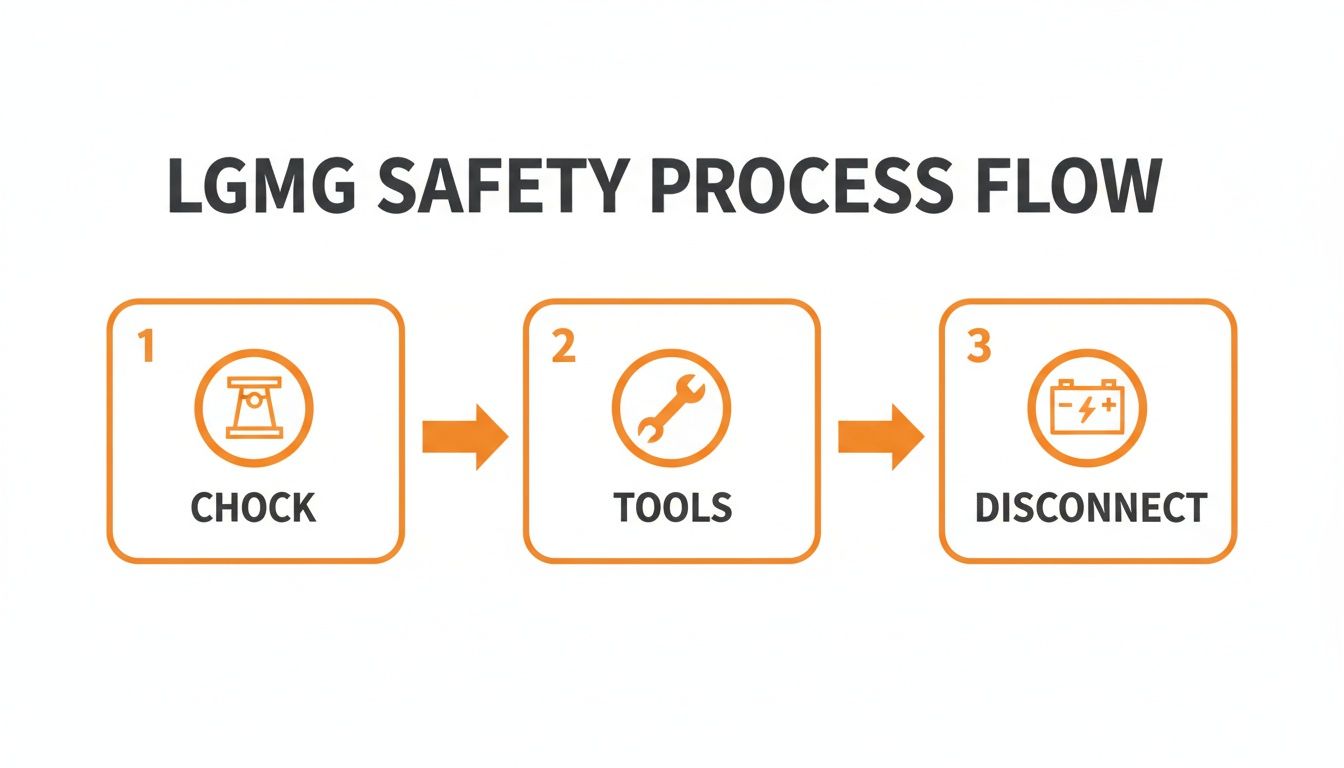
- Chock and Power Down: Ensure all four wheels are securely chocked on level ground. Turn the main battery disconnect switch to the OFF position.
- Locate the Manifold: Find the hydraulic manifold block near the drive wheels. It's a metal block with multiple hoses and valves attached.
- Identify the Release Valve: Your target is the red T-handle valve. It's designed to be easily identified.
- Release the Brakes: Turn the red T-handle counter-clockwise until it stops. Do not force it. You may hear a slight hiss as hydraulic pressure bypasses the circuit. This is normal.
- Confirm Release: Use your pry bar to gently try and rotate a drive wheel. It should spin with some resistance from the motor.
- Re-engage After Moving: Once the machine is moved, you must re-engage the brakes. Turn the red T-handle valve clockwise until it is snug. Refer to your specific service manual for torque values—do not overtighten.
The Technical Guide: Electric Drive Lifts (SR-E Series)
On electric drive machines like the LGMG SR3396E, the brake release is a mechanical lever on each drive motor. You are physically disengaging the brake pack.
- Chock and Power Down: Chock all four wheels securely on level ground and turn the main battery disconnect to OFF.
- Locate the Levers: Find the manual release levers on the end of each electric drive motor. They are often T-handles and may be behind a small bolted cover.
- Disengage Both Brakes: You must disengage the brake on BOTH drive motors. Flip each lever firmly—it's typically a 90 or 180-degree turn. You should feel a definite "clunk" as the brake pack releases.
- Confirm Release: Check that a drive wheel spins freely with a pry bar.
- Re-engage After Moving: This is critical. Before powering the machine on, flip both levers back to their original, engaged position. Powering up the lift with the brakes manually released creates an uncontrolled freewheeling hazard.
Common Questions From the Field
What if I Release the Brakes and It Still Won’t Move?
If you've turned the valve or flipped the levers and you're certain the wheels should be free, but the machine is still locked solid, stop. Do not try to force it. This indicates a seized drive motor or a catastrophic internal hydraulic failure. Dragging it will destroy the drive hubs.
How Fast Can I Tow an LGMG Scissor Lift?
The absolute max is 2 mph (about 3.2 km/h). Walking speed. Any faster will overheat the drive motors and destroy the planetary gears inside the drive hubs, which are not designed to free-wheel at speed.
What Happens if I Forget to Re-Engage the Brakes?
You create a freewheeling, multi-ton safety hazard. Modern LGMG controllers will likely detect the fault and disable the drive function, but you should never rely on a fault code as a safety net. Always make re-engaging the brakes the absolute last step.
The Part You Need
<iframe width="100%" style="aspect-ratio: 16 / 9;" src="https://www.youtube.com/embed/OZbvuT1opTA" frameborder="0" allow="autoplay; encrypted-media" allowfullscreen></iframe>A manual release gets you moving, but the real fix is replacing the failed component. For hydraulic lifts, it's the brake solenoid. On electric drive models, it's the brake coil inside the motor. Waiting for the dealer means 6-8 weeks of downtime while a part ships from China.
China Lift Supply stocks these OEM-compatible brake solenoids and coils in the US, ready for same-day shipping. Note: Components may vary by Gen 1 vs Gen 2 series. Verify with your parts manual.
Can't wait 6 weeks for this part? We have it on the shelf in Kansas. Check the price and availability here: https://www.chinaliftsupply.com.